Blog
Tagged: Print on demand

Print Catalogs are Making a Comeback this Holiday Season

Print Catalogs are Making a Comeback this Holiday Season

Print Catalogs are Making a Comeback this Holiday Season

Today, the marketing spotlight often lands on digital channels such as social media ads, email campaigns, websites and more. You could go into any browser, type in a brand, company name, or even a specific item and have pages and

pages of information. What the internet offers us today is what catalogs did for the average consumer before we had the world at our fingertips. However, what the internet can’t do is make a tangible connection with your audience – and that is where print shines.

As digital channels become oversaturated, print catalogs are making a comeback for many ecommerce brands. But why? Let’s dive in and see how print catalogs can be used to supercharge your seasonal marketing.

History of Holiday Catalogs

During the Industrial Revolution, mass media channels, such as billboards, catalogs, and posters, helped spread the word about new products, creating a booming consumer marketplace. In 1933, Sears printed and mailed their very first “Wish Book,” which became known as the Sear Christmas Catalog. This catalog redefined holiday marketing and became a tradition that turned into an American Icon.

Catalogs continued to grow and soon other brands joined in or tailored existing catalogs for the holiday season. This direct marketing tactic quickly became one of the most popular holiday shopping methods well into the 2000s.

The Appeal of Print Catalogs

Outsmart Digital Overload

The average consumer is overwhelmed by digital marketing messages daily. Though the end of the year holiday season sees one of the largest shopping surges of the entire year, the overabundance of emails and digital advertising has grown monotonous for shoppers. With digital inboxes becoming overcrowded, brands and consumers are returning to print catalogs with nostalgia, yearning for simpler times.

Timeless Nostalgia of Print

For many consumers today, print catalogs are a core memory of their childhoods. We gathered around catalogs to show parents our wish list; we used catalogs for selling candies and knick knacks for school fundraisers; we browsed home and garden catalogs for décor ideas and holiday decorating. Catalogs bring a sense of nostalgia and with that emotion comes engagement and sales.

A Tactile Marketing Experience

Catalogs are tangible and tactile, providing readers with an interactive, personalized experience. You can spend a night flipping through various sections without digital eye fatigue, mark your favorite items with bookmarks, and pass along to your friends when you’re done. Digital can’t offer the same shared, real-life experience that print marketing can.

Multi-Channel Marketing

Though we’re making the case for print, we know that digital marketing is still king in today’s consumer landscape. Brands can easily connect print to their digital catalogs by using unique links and/or QR codes. Shoppers can flip through your catalogs then scan and purchase online when they’re ready to buy. It’s the perfect blend for the modern buyer!

Targeted Storytelling

Lifestyle brands, such as Patagonia and J.Crew, have used their catalogs to not just highlight products, but to tell a story to their shoppers. Incorporating client testimonials, insider product tips, and the story behind product creations and more can give create more authentic engagement for brands and products, increasing sales and turning customers into loyal fans.

The modern catalog is personalized to your audience, offering a targeted blend of storytelling, products, visuals and synergy that sells.

The Return to Print Marketing

Companies like J.Crew, Amazon, Neiman Marcus and Patagonia are embracing the return of print catalogs, and adding a modern twist. Amazon has had a great deal of success with their holiday shopping catalogs geared towards children. Kids can excitedly get new gift ideas and point out to their parents exactly what they want for Christmas, just like children in the 1900’s used to do with the Sears catalog.

J. Crew, who once filed bankruptcy, has revived their once famous catalogs to successfully increase sales and engagement. Patagonia blends editorial content into their catalogs to tell a story of the adventures of their brand and share real examples of their products in action.

Printed catalogs is proving to be a classic form of marketing with an impact that is truly timeless.

Take Advantage of the USPS 2025/2026 Catalog Insights Promotion

Ready to start investing in your audience through catalogs? There is no better time to start than now with the USPS Catalog Insights Promotion. This limited time offer helps businesses enhance their catalog marketing while lowering mailing costs. Eligible participants can receive a 10% discount on qualifying USPS Marketing Mail® catalogs mailed between October 1, 2025, and June 30, 2026, with registration open August 15, 2025 – June 30, 2026.

To qualify, catalogs must:

  • Be at least 12 pages, bound, and include product or service listings with visuals and ordering information.
  • Meet the USPS definition and requirements for a catalog.
  • Complete all required data points and submit a sample for pre-approval in the Mailing Promotions Portal.

This special promotion gives brands an opportunity to boost visibility, engagement, and save on mailing costs—all while continuing the catalog printing revival that connects with customers in a meaningful, lasting way.


Make Your Catalog Count with Preferred!

Preferred Direct has over 30 years of experience assisting brands in their holiday catalog needs. From full color or black and white printing to professional binding to priority postage, we have the technology and know-how to bring your print catalog to life.

When inboxes are overflowing, stand out with a beautifully designed catalog with Preferred Direct. Contact our team today to request an estimate and get started on your printed holiday catalog before the shopping season begins!

More Blogs from Preferred Direct

About the authors

Read More
The Book Report: A Quick-Guide to Commercial Book Printing

The Book Report: A Quick-Guide to Commercial Book Printing

The Book Report: A Quick-Guide to Commercial Book Printing

For countless readers, there is nothing that can replace the feeling of turning the pages of your favorite book. However, in today’s digital age, many authors risk losing readers by relying solely on audio books or e-books. With eyes strained from extended screen time and endless scrolling, a well-crafted book is the tangible escape readers are craving to ease digital fatigue and rekindle the joy of reading.
Printed materials are making a comeback and Preferred Direct is here to help.


So, what “chapters” of print and bindery services are available to bring your next project to life? Enter The Book Report — a quick guide to Preferred Direct’s book printing and bindery services for modern day authors, publishers and beyond.


Preferred Direct Book Binding

The two main types of book printing applications used for most books are perfect bound and saddle stitch printing. At Preferred Direct, we have the latest technologies in stitch and binding machinery for fast, high-quality book printing. Request an Estimate to get started.

Perfect Bound Books

What is perfect bound printing? It is a method of binding printed sheets to a thick, flexible spine, giving a professional and sleek appearance. Perfect bound is the standard when it comes to book options over 200 pages. The sturdy spine offers holds a large amount of pages together and is great real estate for promotional design. You can continue your cover graphics seamlessly across it, and/or add titles, logos, and other text to add to your book appeal on shelf.

Common perfect bound book types include

  • Published Books
  • Yearbooks
  • Large Company Catalogs
  • Textbooks, Workbooks and Manuals

Saddle Stitch Books

Saddle stitch books consist of folded papers nested within each other with wire staples (a.k.a “stitches”) through the spine to neatly secure everything together. It is an economical and polished option for projects up to 120 pages. This lightweight, cost-effective, and professional bindery method is ideal for projects meant to be distributed widely and quickly. It is the go-to bindery option for authors and publishers looking for an efficient, economic application for a limited number of pages.

Common saddle stitch book types include:

  • Magazines & Catalogs
  • Booklets & Brochures
  • Handbooks
  • Guides & More

Preferred Direct Print Options

Once you have decided on your preferred binding style, it’s time to choose the colors and print type. From various colors to paper size options, Preferred Direct has countless ways to make the book uniquely yours.


Full Color vs. Black & White:

  • Black & White: Best for text-heavy projects like author books or training manuals.
  • Full Color: Best for graphic heavy pages, images, or bold covers like textbooks.


Coated vs Uncoated Paper:

  • Coated Paper: Creates vibrant and high-impact images. Great for catalogs, promo materials and projects with lower page counts.
  • Uncoated paper: Creates a more natural feel and is ideal for writing/text heavy projects, higher page counts, and projects that want the classic book feel.


Paper Sizes:

Preferred Direct offers a wide range of sizes for both binding options from as small as 4”x 6” up to 9”x12”, with custom options available upon request. Choosing the right size for your project depends on many factors such as page count, portability, cost, text, and shipping.

Fun Fact: Many women’s clothing catalogs now use 5.5 x 8.5 sizing to fit neatly in a purse and also to qualify for the USPS letter rate, keeping distribution costs down.


Finishing & Fulfillment Services:

Preferred Direct goes beyond printing with full-service finishing and fulfillment options to simplify every stage of your book project. We offer:

  • Design & Pagination – Professional assistance to ensure your book files are clean, polished, and print-ready.
  • Print-on-Demand – Order small runs or scale up to 50,000+ copies to optimize your inventory according to book sales and projected demand.
  • Inventory Management & Shrink Wrapping – Secure storage, protection, and tracking of your printed pieces.
  • Shipping & Distribution – Bulk or direct-to-consumer delivery, managed on your schedule.
  • Fulfillment Services – End-to-end handling, with services such as shrink wrapping, so your books arrive on time and in top condition.


The Closing Chapter

No matter the size, style, or story you want to share through your book project, Preferred Direct is here to help you create the perfect ending. From professional catalogs and author books to academic books and manuals, our print and bindery services ensure your materials don’t just inform—they leave a lasting impression. Let us help you bind your ideas into something unforgettable.

Contact our team today to start writing your perfect story.

More Blogs from Preferred Direct

About the authors

Read More
The Versatility of Digital Printing in Your Direct Marketing

The Versatility of Digital Printing in Your Direct Marketing

The Versatility of Digital Printing

Savvy marketers know that their audience is looking for messages that are inherently speaking to them. In an age of data, people want their information used in a way that will benefit them, not the companies that collect and hoard everything from their nickname to their social security number.Digital printing makes use of digital files rather than a printing plate, and it allows marketers to collate their data so they can change the message of their commercial printing based on the person who receives it. If you’re using variable data, digital printing is usually your best choice.

direct mail servicesPreferred Direct can give you ways to integrate segmentation into commercial printing, so you’re not wasting time or money. Even if you’re using variable data for commercial printing, digital is both fast and cost-effective. It does have a downside, though, in that it can’t always provide the same degree of resolution as other forms of printing. The colors, bleeds, text, margins, and finishing for digital print will be different from traditional options, so marketers may need to focus more on the idea they’re trying to convey. Beyond merely filling in each person’s name, you can do so much more to individualize your more significant point.

Preferred Direct can provide the advice and guidance you need to maximize digital printing. So if you’re attempting to advertise a drop in interest rates, you may want to divide your lists based on the most likely reasons your customers would want to take out a loan. For example, new college graduates may be looking for a starter home while families may be looking for ways to finance their children’s education. Digital printing gives you the chance to alter each image to pique the recipient’s curiosity. 

Print On Demand

Digital printing makes use of print on demand services, making it simple to change information without slowing down the printing process easier. Let’s say it’s time to order directories in bulk to promote a new service at your school. Your larger institution has five locations and slightly different services and pricing for each one. While you could print off a general flyer that lists the information for all five sites, you can also print flyers that are specific to each branch.

This way, people can glance at the flyer to get the information they need rather than having to hunt through the text to find their specific school. Or maybe you want to send out an FAQ regarding a new type of insurance plan, but you want to include a customized quote for each person you send it to. You can use your collated data to generate different quotes for each new piece of direct mail. Whether your list is 5,000, or 50,000, Preferred Direct has the expertise and technology to perform print on demand services without bumping up your budget 

Combining Physical and Virtual Media

Your marketing is an open book for you to fill. However, you’d like it. Following the rules of marketing can certainly get you far, but breaking the rules may get you even farther.

Commercial printing is a tried-and-true way to open a customer’s eyes to a new opportunity, but there are ways to integrate commercial printing campaigns with the rest of your marketing efforts. So if you’re already investing plenty in your digital strategy, there’s no reason you can’t use digital printing to strengthen virtual campaigns for an even more impactful message. Preferred Direct is not only familiar with these techniques, but we also understand how and when to incorporate the best. Here are just two ways we’ve seen marketers get results:

QR codes

Much like commercial printing focuses your marketing on one message, QR codes can do the same.digital printing QR codes

Once the customer scans the image, they’re taken directly to the information they need to know. But QR codes can do even more for a company by giving marketers real-time information about how the customer is using your marketing collateral.

direct mail marketing estimate

Once a QR code is scanned, it’s stamped with both the time of the scan and the user’s general location. This is a great way to understand the true reaction of your customers. If everyone is scanning the code immediately, it’s a sign that your campaign is creating a strong impression. If they’re waiting to scan it, it may signify that customers feel they need more time to peruse the data. It’s a sign that you’re marketing to people who are invested in what you have to offer. And of course, if no one is scanning the code, it’s an indicator that you may need to rethink your marketing segmentation.

That is why it’s important to personalize. Digital printing using variable data allows your to tailor each message using names, birthdays, colors, etc. to create a bigger impact with your print. With this marriage between print and virtual mediums, you’re collecting an awful lot of information about your customer. And yet, somehow, data slips through the cracks of companies all the time.

To avoid asking the same question to your customers, you really need a way to combine all the details you receive — regardless of where it comes from. Print can be a great way to engage your customers first before deploying a pop-up ad that practically demands their email address.

Once you have the information in hand, you can start filling in the details of your customers that ultimately drive their decisions. They may be more likely to fill out a more involved form online once they’ve received information in print form and chose to scan the code.

Preferred Direct two people pointing to a laptop computer with a man in the backgroundYou can then measure the responses from each group to see which one made a bigger impact. If the pamphlet had more interest, you could focus on how to improve the content, so it generates an even higher response rate. Saving Money on Creative Solutions It’s not always easy to justify spending money on commercial printing, especially not when an email is essentially free to send. To make the risk feeling a little less precarious, Preferred Direct can ensure a virtually wasteless campaign.

Our technology includes the HP T-240 HD digital printer and other top of the line equipment, which produce remarkable results. It’s full-color, high-speed, and true roll-to-roll perfection, eliminating the inconsistencies that can make your commercial printing look unprofessional. In other words, we’ve invested in the machinery, so you don’t have to. If you’re considering a piece of direct mail with complex folds, the technology makes it possible to design the folds without direct intervention from staff. This helps us keep our costs down (and yours by extension) while giving us the means for better inventory control.

The Ideal Digital Printing Partner

variable data printing HPPreferred Direct has been in business since 1990. We may not know everything, but we do know quality printing.

Over the years, it was only inevitable that we’d become expert marketing strategists too. We make it possible for you to find smarter ways to use the leverage you’ve already built. Your clientele, mission, initiatives, staff: these are all assets that can make your bottom line go through the roof. If you’re interested in vertical integration, we understand and anticipate your needs long before you even realize you have them.

Creative solutions in digital printing can jazz up even the most basic of marketing, but sometimes it takes an outside eye to notice new ways to lure customers in. No matter the budget or deadline, we find ways to color within the lines you set for us while still providing new ideas and strategy choices. From the initial contract to the last leg of the project, we let you set your level of involvement. And if you happen to change your mind at the last second (maybe you’ve decided that you need A/B/C testing instead of just A/B), we’ve got you covered there too.

Contact us today to receive reliable digital printing services and creative solutions to your toughest marketing questions.

More Blogs from Preferred Direct

About the authors

Read More
Learn How Print on Demand Benefits Inventory Control

Learn How Print on Demand Benefits Inventory Control

Learn How Print on Demand Benefits Inventory Control

Stacks of white paper

We have been asked dozens of times, “How Print on Demand Benefits Inventory Control.”  You will learn in the following article. Print marketing materials are still one of the best ways to raise awareness of your products and services. According to a survey from FedEx, four out of five small business owners say that print marketing helps them stand out among the competition. Our world may be increasingly digital, but there’s something about the feel of print that enhances trust and appeal. What you might not know is that you can get all the benefits of print marketing while keeping costs under control by using print on demand companies. Learn what print on demand is, how print on demand works, and the benefits of print on demand for inventory control.

What is Print on Demand?

Save on Inventory

Print on demand is a custom printing process. The need determines the print run size. Print orders are planned as they come in, rather than guaranteed before the print run is determined. Let’s say that you have a customer in another state that you have been supplying print material, in this case, it is informational healthcare books.  You normally would order the yearly quantity in this case 50,000 books. Now, with print on demand, you only order what is needed at the time maybe 2,000 books.

direct mail marketing estimate
In other words, if you normally print 50,000 books per year and these are kept in inventory until a quantity is needed but you end up throwing away 12,000 because you didn’t need them, it will be reflected in your budget. Not with print on demand! The print on demand model was developed after digital printing. Before then it would not have been economically feasible for a printer to set up for a job to print a small quantity. With print on demand, files can be printed as needed, when needed, and only in quantity required — even if it’s a small quantity. Since the file is saved, documents can be printed any time without extra work or costs on the part of the print shop or you, the business owner. Cutting back on print paper comes with financial and environmental incentives too.

Avoid order minimums

Another benefit of print on demand is you can get paper marketing materials for that important brochure or updated healthcare material without worrying about the need to meet traditional printing order minimums. It’s easier to maintain a print inventory with print on demand because you can see your existing print stock at a glance and order precisely what you need saving you money. Print-on-demand benefits all sorts of printed materials, not just marketing materials. For healthcare and medical fields, print on demand is practical for informational, and customer service-oriented print campaigns, such as pamphlets or books that explain the benefits of a given health insurance plan. Healthcare and insurance companies can also create customized printed documents for their customers, including EOBs.  Just be sure that your data is sent through a secure FTP site.

Reduce set up costs

With the traditional printing process, the setup costs represent a large portion of the total job costs. The cost is amortized over the total print run, so it’s a marginal cost per item printed. With digital printing, there’s not as much to set up, so it becomes cost-effective to do smaller jobs that would not be economically feasible with the traditional printing process. The benefits of a small print run carry over to inventory and management, as well. For example, consider a large print job, where your business must order dozens of boxes of material, which then sit around in storage until your company uses them. If you have enough storage space onsite, then you can store items in your building. If you don’t have enough storage space, your business will need to assume warehousing costs to pay for physical inventory. Switching to print on demand reduces inventory accounting, storage costs, handling costs, and waste.

Inventory Control

perfect bound book printing catalog

Inventory management may not be something you give much thought to, but print-on-demand offers significant inventory control benefits over the traditional print process. As mentioned above, the traditional print model comes with a high setup cost. For high-volume items, where you know the materials will move before they become dated, traditional printing may be the right choice. There’s another result from the traditional process, which is high amounts of waste. If you overestimate the number of copies you will need for a brochure or flyer; then you could be left with boxes of material that are soon outdated.

Companies often don’t question the drawbacks of the print model — or how the waste impacts their bottom line by tying up capital. The quality of digital printing has improved, where printed products now rival the quality of offset printed items. As a small business, whether you’re in the financial, health, or nonprofit sectors, it’s never been a better time to use print-on-demand services. The costs per unit comparable to traditional print jobs, but the financial savings and inventory control benefits exceed what regular printing offers. Inventory control shows you at a glance how many copies of print items you have. You can check how much stock you have and order additional copies either as often as you need or when you hit minimum stock levels. With inventory control, your business will always have the right number of copies in the right place when needed — say, for an upcoming brochure mailing. By ordering low quantities, you can keep costs affordable while reducing the expense of the item storage and disposal.

Preferred Direct’s Print-On-Demand Service

Now that you know the benefits of print on demand, you might be wondering how print on demand works. The process starts well before printing. At Preferred Direct we want to make sure that your graphic design and the finished product look great. Also, that it will meet your needs, and that the work is cost-effective. We offer a range of printing services with or without variable data. We offer binding and finishing solutions and we will always talk through the options with you so you know how to get the look you need for each print job. We are a very hands-on printing provider, so we work one-on-one with all of our clients through the design and fulfillment process. We’ll make sure you understand all of the factors that affect the print job, so you know what variables affect the quality of the product or our approach to keeping your sensitive information secure. When everything is ready, we’ll do the print job for you, using the highest standards of data security.

direct mail services

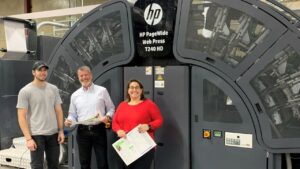
Some Preferred Direct Team Members in front of our HP Digital Printer for VDP

When you’re relying on print on demand to keep inventory levels low, you need a supplier who will be able to deliver orders efficiently and effectively. Inventory control will ensure the customer never runs out. Preferred Direct can complete a job in anywhere from one to three days, once you’ve done the initial setup work of creating and refining the order. At Preferred, we work with businesses in a range of industries, including education, nonprofit, medical, and insurance. To get a quote for printing services, or to learn more about what sets us apart from other printing companies, contact us today. Call Toll-Free: 1.844.719.1848.

More Blogs from Preferred Direct

About the authors

Read More