Blog
Author: Kristen Hollar

Print Catalogs are Making a Comeback this Holiday Season

Print Catalogs are Making a Comeback this Holiday Season

Print Catalogs are Making a Comeback this Holiday Season

Today, the marketing spotlight often lands on digital channels such as social media ads, email campaigns, websites and more. You could go into any browser, type in a brand, company name, or even a specific item and have pages and

pages of information. What the internet offers us today is what catalogs did for the average consumer before we had the world at our fingertips. However, what the internet can’t do is make a tangible connection with your audience – and that is where print shines.

As digital channels become oversaturated, print catalogs are making a comeback for many ecommerce brands. But why? Let’s dive in and see how print catalogs can be used to supercharge your seasonal marketing.

History of Holiday Catalogs

During the Industrial Revolution, mass media channels, such as billboards, catalogs, and posters, helped spread the word about new products, creating a booming consumer marketplace. In 1933, Sears printed and mailed their very first “Wish Book,” which became known as the Sear Christmas Catalog. This catalog redefined holiday marketing and became a tradition that turned into an American Icon.

Catalogs continued to grow and soon other brands joined in or tailored existing catalogs for the holiday season. This direct marketing tactic quickly became one of the most popular holiday shopping methods well into the 2000s.

The Appeal of Print Catalogs

Outsmart Digital Overload

The average consumer is overwhelmed by digital marketing messages daily. Though the end of the year holiday season sees one of the largest shopping surges of the entire year, the overabundance of emails and digital advertising has grown monotonous for shoppers. With digital inboxes becoming overcrowded, brands and consumers are returning to print catalogs with nostalgia, yearning for simpler times.

Timeless Nostalgia of Print

For many consumers today, print catalogs are a core memory of their childhoods. We gathered around catalogs to show parents our wish list; we used catalogs for selling candies and knick knacks for school fundraisers; we browsed home and garden catalogs for décor ideas and holiday decorating. Catalogs bring a sense of nostalgia and with that emotion comes engagement and sales.

A Tactile Marketing Experience

Catalogs are tangible and tactile, providing readers with an interactive, personalized experience. You can spend a night flipping through various sections without digital eye fatigue, mark your favorite items with bookmarks, and pass along to your friends when you’re done. Digital can’t offer the same shared, real-life experience that print marketing can.

Multi-Channel Marketing

Though we’re making the case for print, we know that digital marketing is still king in today’s consumer landscape. Brands can easily connect print to their digital catalogs by using unique links and/or QR codes. Shoppers can flip through your catalogs then scan and purchase online when they’re ready to buy. It’s the perfect blend for the modern buyer!

Targeted Storytelling

Lifestyle brands, such as Patagonia and J.Crew, have used their catalogs to not just highlight products, but to tell a story to their shoppers. Incorporating client testimonials, insider product tips, and the story behind product creations and more can give create more authentic engagement for brands and products, increasing sales and turning customers into loyal fans.

The modern catalog is personalized to your audience, offering a targeted blend of storytelling, products, visuals and synergy that sells.

The Return to Print Marketing

Companies like J.Crew, Amazon, Neiman Marcus and Patagonia are embracing the return of print catalogs, and adding a modern twist. Amazon has had a great deal of success with their holiday shopping catalogs geared towards children. Kids can excitedly get new gift ideas and point out to their parents exactly what they want for Christmas, just like children in the 1900’s used to do with the Sears catalog.

J. Crew, who once filed bankruptcy, has revived their once famous catalogs to successfully increase sales and engagement. Patagonia blends editorial content into their catalogs to tell a story of the adventures of their brand and share real examples of their products in action.

Printed catalogs is proving to be a classic form of marketing with an impact that is truly timeless.

Take Advantage of the USPS 2025/2026 Catalog Insights Promotion

Ready to start investing in your audience through catalogs? There is no better time to start than now with the USPS Catalog Insights Promotion. This limited time offer helps businesses enhance their catalog marketing while lowering mailing costs. Eligible participants can receive a 10% discount on qualifying USPS Marketing Mail® catalogs mailed between October 1, 2025, and June 30, 2026, with registration open August 15, 2025 – June 30, 2026.

To qualify, catalogs must:

  • Be at least 12 pages, bound, and include product or service listings with visuals and ordering information.
  • Meet the USPS definition and requirements for a catalog.
  • Complete all required data points and submit a sample for pre-approval in the Mailing Promotions Portal.

This special promotion gives brands an opportunity to boost visibility, engagement, and save on mailing costs—all while continuing the catalog printing revival that connects with customers in a meaningful, lasting way.


Make Your Catalog Count with Preferred!

Preferred Direct has over 30 years of experience assisting brands in their holiday catalog needs. From full color or black and white printing to professional binding to priority postage, we have the technology and know-how to bring your print catalog to life.

When inboxes are overflowing, stand out with a beautifully designed catalog with Preferred Direct. Contact our team today to request an estimate and get started on your printed holiday catalog before the shopping season begins!

More Blogs from Preferred Direct

About the authors

Read More
The Book Report: A Quick-Guide to Commercial Book Printing

The Book Report: A Quick-Guide to Commercial Book Printing

The Book Report: A Quick-Guide to Commercial Book Printing

For countless readers, there is nothing that can replace the feeling of turning the pages of your favorite book. However, in today’s digital age, many authors risk losing readers by relying solely on audio books or e-books. With eyes strained from extended screen time and endless scrolling, a well-crafted book is the tangible escape readers are craving to ease digital fatigue and rekindle the joy of reading.
Printed materials are making a comeback and Preferred Direct is here to help.


So, what “chapters” of print and bindery services are available to bring your next project to life? Enter The Book Report — a quick guide to Preferred Direct’s book printing and bindery services for modern day authors, publishers and beyond.


Preferred Direct Book Binding

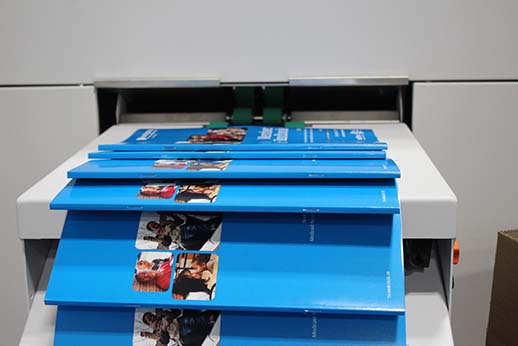
The two main types of book printing applications used for most books are perfect bound and saddle stitch printing. At Preferred Direct, we have the latest technologies in stitch and binding machinery for fast, high-quality book printing. Request an Estimate to get started.

Perfect Bound Books

What is perfect bound printing? It is a method of binding printed sheets to a thick, flexible spine, giving a professional and sleek appearance. Perfect bound is the standard when it comes to book options over 200 pages. The sturdy spine offers holds a large amount of pages together and is great real estate for promotional design. You can continue your cover graphics seamlessly across it, and/or add titles, logos, and other text to add to your book appeal on shelf.

Common perfect bound book types include

  • Published Books
  • Yearbooks
  • Large Company Catalogs
  • Textbooks, Workbooks and Manuals

Saddle Stitch Books

Saddle stitch books consist of folded papers nested within each other with wire staples (a.k.a “stitches”) through the spine to neatly secure everything together. It is an economical and polished option for projects up to 120 pages. This lightweight, cost-effective, and professional bindery method is ideal for projects meant to be distributed widely and quickly. It is the go-to bindery option for authors and publishers looking for an efficient, economic application for a limited number of pages.

Common saddle stitch book types include:

  • Magazines & Catalogs
  • Booklets & Brochures
  • Handbooks
  • Guides & More

Preferred Direct Print Options

Once you have decided on your preferred binding style, it’s time to choose the colors and print type. From various colors to paper size options, Preferred Direct has countless ways to make the book uniquely yours.


Full Color vs. Black & White:

  • Black & White: Best for text-heavy projects like author books or training manuals.
  • Full Color: Best for graphic heavy pages, images, or bold covers like textbooks.


Coated vs Uncoated Paper:

  • Coated Paper: Creates vibrant and high-impact images. Great for catalogs, promo materials and projects with lower page counts.
  • Uncoated paper: Creates a more natural feel and is ideal for writing/text heavy projects, higher page counts, and projects that want the classic book feel.


Paper Sizes:

Preferred Direct offers a wide range of sizes for both binding options from as small as 4”x 6” up to 9”x12”, with custom options available upon request. Choosing the right size for your project depends on many factors such as page count, portability, cost, text, and shipping.

Fun Fact: Many women’s clothing catalogs now use 5.5 x 8.5 sizing to fit neatly in a purse and also to qualify for the USPS letter rate, keeping distribution costs down.


Finishing & Fulfillment Services:

Preferred Direct goes beyond printing with full-service finishing and fulfillment options to simplify every stage of your book project. We offer:

  • Design & Pagination – Professional assistance to ensure your book files are clean, polished, and print-ready.
  • Print-on-Demand – Order small runs or scale up to 50,000+ copies to optimize your inventory according to book sales and projected demand.
  • Inventory Management & Shrink Wrapping – Secure storage, protection, and tracking of your printed pieces.
  • Shipping & Distribution – Bulk or direct-to-consumer delivery, managed on your schedule.
  • Fulfillment Services – End-to-end handling, with services such as shrink wrapping, so your books arrive on time and in top condition.


The Closing Chapter

No matter the size, style, or story you want to share through your book project, Preferred Direct is here to help you create the perfect ending. From professional catalogs and author books to academic books and manuals, our print and bindery services ensure your materials don’t just inform—they leave a lasting impression. Let us help you bind your ideas into something unforgettable.

Contact our team today to start writing your perfect story.

More Blogs from Preferred Direct

About the authors

Read More
What is an Explanation of Benefits (EOB)?

What is an Explanation of Benefits (EOB)?

What is an Explanation of Benefits (EOB)?

Health insurance companies provide EOB’s or Explanation of Benefits statements after individuals receive their health care services. While it may look like a bill, it isn’t —though it can contain important cost-related information that affects what the patient may ultimately owe.

Let’s break down what an EOB is, how it works, and how Preferred Direct helps insurers deliver them clearly, securely, and efficiently.

What is an EOB?

An Explanation of Benefits is a document issued by a health insurer to explain how a specific medical service claims were or is currently being processed. It details the services provided, the cost of services, how much of the insurance claim was paid by the insurance company and how much is outstanding, based upon the costs of the care provided and the individual’s health insurance plan.

The EOB usually includes a clear disclaimer at the top: “This is Not a Bill.” Despite this, the EOB can often resemble a bill, making it easy for the patient to confuse the two. All patients should carefully review the EOB before making any payments, as the amounts may differ once the insurer’s portion has been processed.

What’s Included in an EOB?

A standard EOB includes the following key information:

  • Date and type of service provided
  • Provider’s name and contact information
  • Amount billed by the provider
  • Amount allowed by the insurer
  • Amount paid by the insurer
  • Patient’s remaining responsibility (co-pay, deductible, coinsurance)
  • Policy-specific details, such as the patient’s deductible status or annual out-of-pocket expenses

To illustrate with an example, consider an allergy screening. The allergist charges a set fee for service, and a health insurer pays a certain amount of that, which is dictated by the individual policy, deductible amounts, and other variables. Individuals usually pay a co-pay at the time of appointment but may owe more money later once the insurer processes the claim if there’s a difference in the service cost and what the insurer will cover.

Medical vs. Dental EOBs

EOBs generally come after any medical or dental service is provided. Dental EOBs are similar to medical EOBs in form and function and have the same requirements. However, since dental insurance is limited in its coverage, patients who need extensive dental procedures may owe far more than they would for medical care.

Why do EOBs Matter to Patients?

An EOB is more than some administrative paperwork received in the mail —they provide important transparency for patients managing their care and finances.

Reviewing them helps patients to:

  • Confirm the correct services were billed
  • Verify that the services were billed at the correct amount
  • See how their benefits are being applied
  • Track their deductible and any out-of-pocket limits
  • Identify any potential errors or unauthorized claims

The information included in the EOB helps the insured to better understand the full scope of what was covered, and what they owe. While EOBs help explain medical billing information to the insured, they can be challenging to understand, and errors can happen. Many patients need to call their insurer to ask targeted questions, so they can better understand both the EOB form and any subsequent medical bills that arrive.

How Preferred Direct Supports EOB Delivery?

Preferred Direct helps insurers generate and deliver EOB statements that are clear, timely, and tailored to the needs of each recipient.

We offer:

  • Statement Generation – Our systems turn health data into professional, policy-specific EOB documents.
  • Print-on-Demand We print EOBs quickly and accurately as claims are processed, reducing turnaround time.
  • Variable Data Printing– We ensure each patient receives a personalized and easy-to-follow statement to better understand their services and coverage.
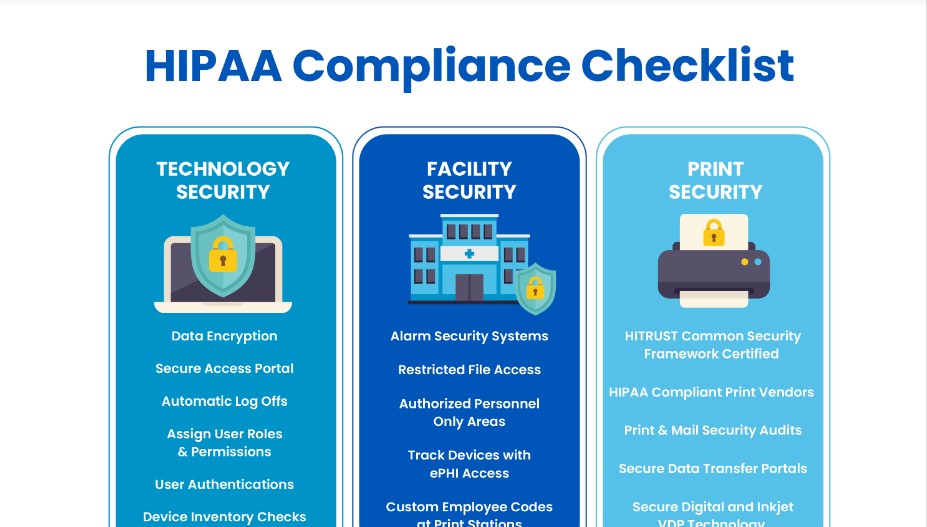
  • Data Security – We maintain HITRUST certification and keep up to date with all HIPAA requirements so that we can serve our insurance industry customers.

Our services make the EOB process simple, secure, and efficient—so your internal team can stay focused on serving members and managing claims.

Conclusion

An Explanation of Benefits is a vital communication tool for both the insurers and the insured. It helps provide transparency in healthcare billing and claims as well as tracking annual deductibles and out-of-pocket costs.

Preferred Direct specializes in generating personalized EOBs that help your patients understand their insurance claims with speed, accuracy, and professionalism. Ready to learn more? Read our “Do You Know Your Explanation of Benefits Mailing Requirements?” blog to understand specific mailing requirements or contact our team to get started on a project estimate.

Printed Collateral is Here to Stay

Printed Collateral is Here to Stay

Printed Collateral is Here to Stay   With the constant push for higher digital engagement, perfectly curated social feeds, and algorithm optimized content, it’s easy for businesses to focus...

Remaining HIPAA Compliant with Third Party Printers

Remaining HIPAA Compliant with Third Party Printers

Remaining HIPAA Compliant with Third Party Printers Are you truly HIPAA compliant? Maybe you’ve set up certain measures of data security and protected your processes internally, but what about your...

More Blogs from Preferred Direct

About the authors

Read More
Do You Know Your Explanation of Benefits Mailing Requirements?

Do You Know Your Explanation of Benefits Mailing Requirements?

Do You Know Your Explanation of Benefits Mailing Requirements?

Health insurance providers are required to send Explanation of Benefits (EOB) statements after a patient receives health care services. These forms detail how a claim was processed, including what portion was covered by the insurer and what amount, if any, remains the patient’s responsibility—based on the individual’s healthcare plan and the cost of care. Because EOBs contain sensitive medical and financial information, they are protected under HIPAA regulations. As a result, insurers must follow strict guidelines regarding how EOBs are generated, delivered, and stored—balancing compliance with patient privacy and communication preferences.

EOB Mailing Requirements

HIPAA Compliance & Mailing EOB’s

While some patients choose to view their Explanation of Benefits online, many patients are reluctant to view sensitive information online and would prefer to receive a hard copy by mail.

Our  Statement Generation  or  print on demand services make it simple to create and mail personalized EOB statements to users as the need arises. HIPAA’s privacy rule affects statement generation and EOB mailing requirements.

Key EOB Mailing Requirements

  • Protected Health Information (PHI) must be secured during all stages of handling—printing, storage, transport, and delivery. PHI includes any data that identifies a patient and relates to their health conditions, treatments, demographic information, or payment.
  • Mailings must comply with HIPAA Privacy and Security Rules. HIPAA does not mandate how EOBs are delivered (paper vs. digital), but it does require that delivery methods safeguard patient privacy.
  • Patients must be given the option to receive paper EOBs, unless they have explicitly opted for electronic delivery. This is reinforced by recent rules under the 21st Century Cures Act.
  • Mailings must be addressed to the correct individual or authorized party. Variable data printing should be used to ensure personalization and prevent mismailing.
  • Adolescent privacy protections apply. In some cases, insurers may be required to send EOBs confidentially for minors or dependents (especially regarding sensitive services), depending on state law.
  • Mail vendors must sign a Business Associate Agreement (BAA) with the health plan or provider if they handle PHI. This is a legal requirement under HIPAA.

Given that your medical organization must comply with HIPAA, any direct mail or electronic service you work with must have a thorough understanding of HIPAA and its privacy laws, and be able to send out confidential medical information in an appropriate manner. Knowing your EOBs is important. Preferred Direct complies with all HIPAA requirements.

An insurer cannot be held liable if a patient’s confidential information is disclosed when all proper measures are taken. However, if an insurer does not take proper steps to preserve the integrity of private information, and they are found to be negligent, they will face fines that range from $100 to $50,000 for every violation.

Protected vs Non-Protected Healthcare Mailings

Direct communication companies, like Preferred Direct, provide insurers with a range of medical statements, including EOBs, medical bills, plan benefits, and other healthcare forms, electronically or hard copies. While healthcare marketing materials may not have any private patient information, thus be exempt from HIPAA.  An individual’s sensitive medical forms must have their confidentiality protected.

Sending EOB Statements

Preferred Direct is a knowledgeable partner for insurers who want to outsource their billing to a third party who can provide fast, accurate, and HIPPA-Compliant statement generation or electronic communication services. Since direct communication companies specialize in printing and sending campaigns, hard copies, or electronically, they can do it efficiently.

Outsourcing EOB Mailings

Outsourcing this service also saves time while allowing employees to focus on mission-critical tasks. Patients enjoy receiving accurate materials promptly.  Preferred Direct’s communication services generally accept health data in a variety of formats, including .csv, .xls, or .txt. Direct communication companies using the supplied data will generate an accurate Explanation of Benefits statement.

Preferred Direct also offers e-billing services, in which medical bills and EOB statements can be generated and electronically transmitted through patient online portals or emailed, streamlining the EOB mail process for insurers.

Key Outsourcing Considerations

Confidential Personalization. Since forms must be addressed to individual patients as part of HIPAA compliance, look for a direct mail shop that offers variable data printing, in which patients’ names and other unique data can be included in the mailings for customized, meaningful communication.

Compliance & Certifications. To ensure security and confidentiality protection, insist upon a direct mail provider that has a HITRUST certification and maintains HIPAA compliance, which is the most common security framework for healthcare data in the U.S.

Preferred Direct has HITRUST certification and keeps up to date with all HIPAA requirements so that we can serve our insurance industry customers.

Industry Mailing Experience. Not only are we attentive to the healthcare industry requirements, but we also offer highly efficient direct mail services. Since we use match mailing and postage automation services, we can efficiently process and send an Explanation of Benefits statement to thousands of members while saving money.

Inventory & Product Diversification We create and maintain customized printing products for our customers, and we update our in-house stock with measures for inventory control. This way, we’re always ready for your next mailing. Whether you’re looking to outsource all of your medical statements, marketing collateral, member handbooks and more, look for a printer that is an all-in-one source to streamline communications and order management.

Conclusion

When you are dealing with Explanation of Benefits you must be certain that all HIPAA rules are met.  Be especially careful with any and all information relative to the person, and that information should be treated with the utmost confidentiality.

There are savings to be had by outsourcing the EOB statements to a competent print and mail production house. Consider Preferred Direct, the preferred print and mailing partner for health and insurance enterprises nationwide. Request a project estimate or receive some samples to get started.

Printed Collateral is Here to Stay

Printed Collateral is Here to Stay

Printed Collateral is Here to Stay   With the constant push for higher digital engagement, perfectly curated social feeds, and algorithm optimized content, it’s easy for businesses to focus...

Remaining HIPAA Compliant with Third Party Printers

Remaining HIPAA Compliant with Third Party Printers

Remaining HIPAA Compliant with Third Party Printers Are you truly HIPAA compliant? Maybe you’ve set up certain measures of data security and protected your processes internally, but what about your...

More Blogs from Preferred Direct

About the authors

Read More
How to Increase Billing ROI with Transpromo Marketing

How to Increase Billing ROI with Transpromo Marketing

What is Transpromo Marketing?

Transpromo marketing, short for “transactional-promotional” marketing, is the practice of merging transactional documents (like bills, invoices, or account statements) with promotional content. These documents are already being sent to customers as part of regular businesstranspromo marketing example operations, making them a cost-effective channel for adding marketing messages. When done strategically, using billing documents as a dual-purpose tool to both inform customers and drive revenue has massive potential to increase ROI.

Transform Billing into a Revenue Driver

By combining billing with carefully crafted promotional content, businesses can transform routine mailings into a powerful marketing tool. For example, a billing statement could include a promotion for a new referral program, or a utility bill might highlight discounts for energy-efficient lighting and power cords.

By integrating advertisements, cross-sell offers, or informative content into billing documents, you leverage the high open and read rates of transactional mail. Viewers are more likely to open a bill, than they are to open unknown promotional mail.

The key lies in personalizing these promotions. Using customer data and variable data printing (VDP), businesses can tailor the message, piece by piece, to align with the recipient’s known needs, demographics or habits.

transpromo bill printing

Why Does Transpromo Work?

Transactional documents boast some of the highest engagement rates in the direct mail space. Customers are known to likely to open, review, and retain them. Incorporating promotional content into these documents helps your message reach a highly attentive audience.

Additionally, this approach eliminates the need to send separate promotional mailers, reducing marketing costs while maximizing impact. This dual-purpose format is especially effective for financial institutions, business and home services, universities, utilities, healthcare providers, and subscription-based services.


How Preferred Direct Marketing Maximizes Transpromo Potential

Preferred Direct Marketing specializes in creating customized financial documents that seamlessly combine essential transactional information with eye-catching promotional content. With expertise in secure data management, advanced printing techniques, and integrated direct mail strategies, PDM ensures that every piece of transpromo material delivers measurable results.

Leveraging financial documents as a marketing channel is a low-cost, high-impact way for businesses to reach their customers. Utilizing personalization techniques such as variable data printing can help boost billing ROI by connecting essential customer information with promotional messages that resonate with their needs.

Contact PDM today to get started with your own transpromo marketing campaign and see the ROI for yourself!

More Blogs from Preferred Direct

About the authors

Read More
Print Campaign Ideas for Higher Ed Marketing

Print Campaign Ideas for Higher Ed Marketing

Print Campaign Ideas for Higher Ed Marketing

Whether you’re looking to recruit new students, engage alumni, or share important updates with faculty and staff, print campaigns are a highly effective medium for higher ed marketing.

Printed materials offer a tangible and personal touch that digital marketing can’t always provide. For example, a well-designed orientation booklet can be held, shared, and stored as a keepsake, capturing the moment of a young entrepreneur’s first years in college.

As a trusted print & mail partner for over 35 years, Preferred Direct has some ideas for using print to connect with your college community…


Higher Ed Marketing Print Campaigns

Colleges and universities can target several key audiences through print campaigns. Here’s a few great print marketing strategies for each group. For assistance, contact Preferred Direct.


For incoming students and undergraduates

Higher Ed MarketingProspectus / Admissions Booklet: Send a custom designed university booklet to prospective students and show what life at your institution could be. Include a college overview, academic programs, campus life, the admissions process and financial aid options. Attract the next class with engaging images, campus activities, student testimonials and a message from the President or Dean.

ROI tip: send a postcard first to ALL prospective students to sign up for your email newsletter. For those that sign up, follow up by sending the full University booklet. The postcard is a budget-friendly option to generate interest, allowing you to send your valuable printed materials only to those that are more likely to apply.

Program Brochures:  Informative program brochures can help attract and excite students for the degrees they’re most interested in. You can include information on pre-requisites, courses, tuition fees, program events, and semester schedules (or where to find them) for each degree program. Having a separate booklet will help students choose the right course of study and inspire confidence and independence as they navigate their academic career. 

Orientation & Campus Life: Once students are accepted, professionally printed orientation materials can help ease their transition to campus life. Booklets for student housing options, building info and campus maps, student groups and associations and more are all print pieces students need to take full advantage of all your university has to offer.


For alumni and donor relations

Alumni Newsletters: Newsletters keep alumni and donors informed about the happenings of their alma mater and how funds are impacting student life and success. Feature stories on recent accomplishments, star programs, sports tickets, upcoming events, student spotlights, and ways to get involved or give back.

Annual Report: Showcasing the impact of donations can be a powerful way to engage with donors too. Consider creating an annual report that highlights project updates, fundraising goals, and program impact that have been made possible through their contributions.

Event Invitations: Printed letters or postcards inviting alumni to events such as homecoming, reunions, seminars, or fundraising galas can help generate excitement and encourage attendance. Be sure to include all relevant event details and a call-to-action for RSVPs.

Transpromo Marketing: Incorporate transpromo marketing into your donor billing letters to maximize engagement and highlight upcoming marketing initiatives. Transpromo marketing is incorporating marketing promotions into your billing materials. Learn more here.


For athletics and Greek life

Recruiting Materials: Attract and recruit top talent to your university with rockstar printed booklets. A saddle-stitched brochure or booklet can showcase your programs, scholarships, and success stories from current student-athletes and greek life and convince top performers to pick your programs.

Higher Ed Marketing CampaignAthletics Schedule: Send out athletic schedules and flyers for upcoming sporting events to promote game attendance, highlight star players, and encourage fans to show their school spirit.

Fundraising Campaigns: If your sports teams are in need of additional funding, a well-designed mailer or postcard can help raise awareness and encourage donations from alumni, parents, and fans.


Your Partner for Higher Ed Marketing

When selecting a print partner for higher ed marketing, you want to choose a reputable and reliable company that has experience working with educational institutions. At Preferred Direct, we understand the unique needs and goals of colleges and universities. Our local, family-owned printer offers print solutions, direct mail services, and bindery options to meet your needs.

Preferred Direct is HITRUST-certified to ensure the security and confidentiality of your sensitive information. Request a project estimate to get started today!

More Blogs from Preferred Direct

About the authors

Read More